
Addressing Health Inequalities Through Community Cooking
At Diversity House, we recognise that a kitchen is far more than a space to prepare meals. It is an incubator for personal growth, a classroom for vital life skills, and a powerful equaliser in the fight against systemic social barriers.
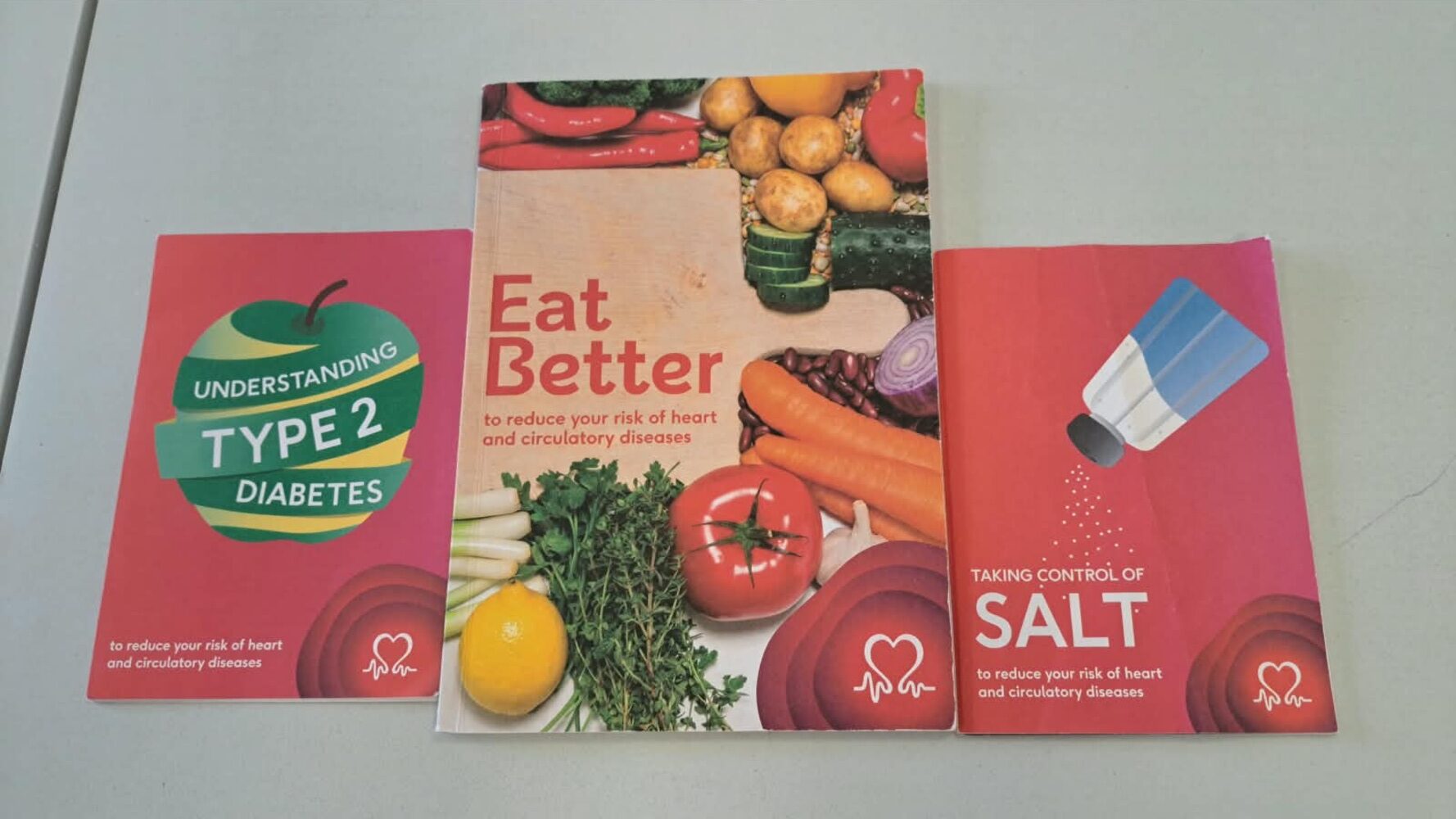
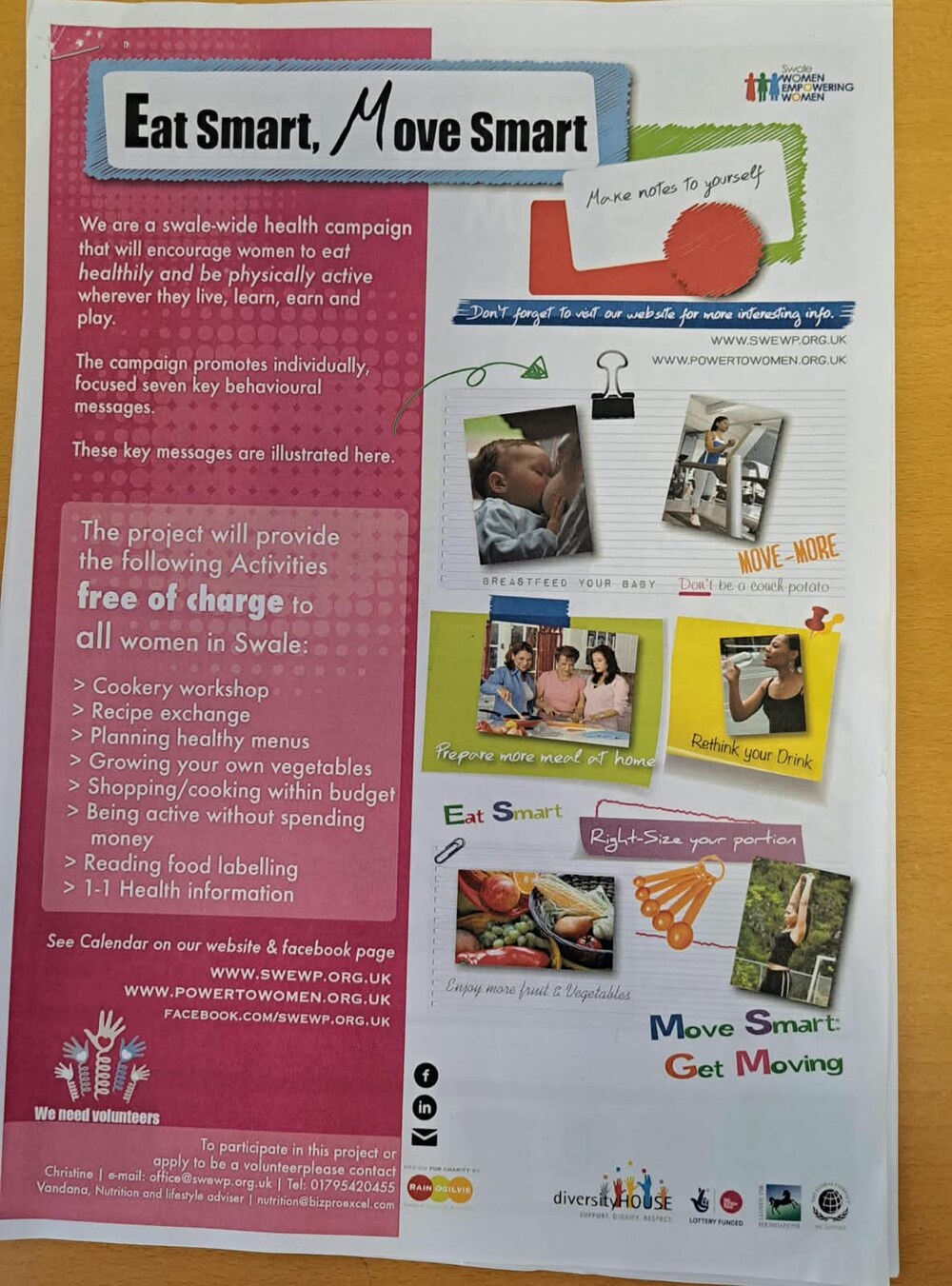
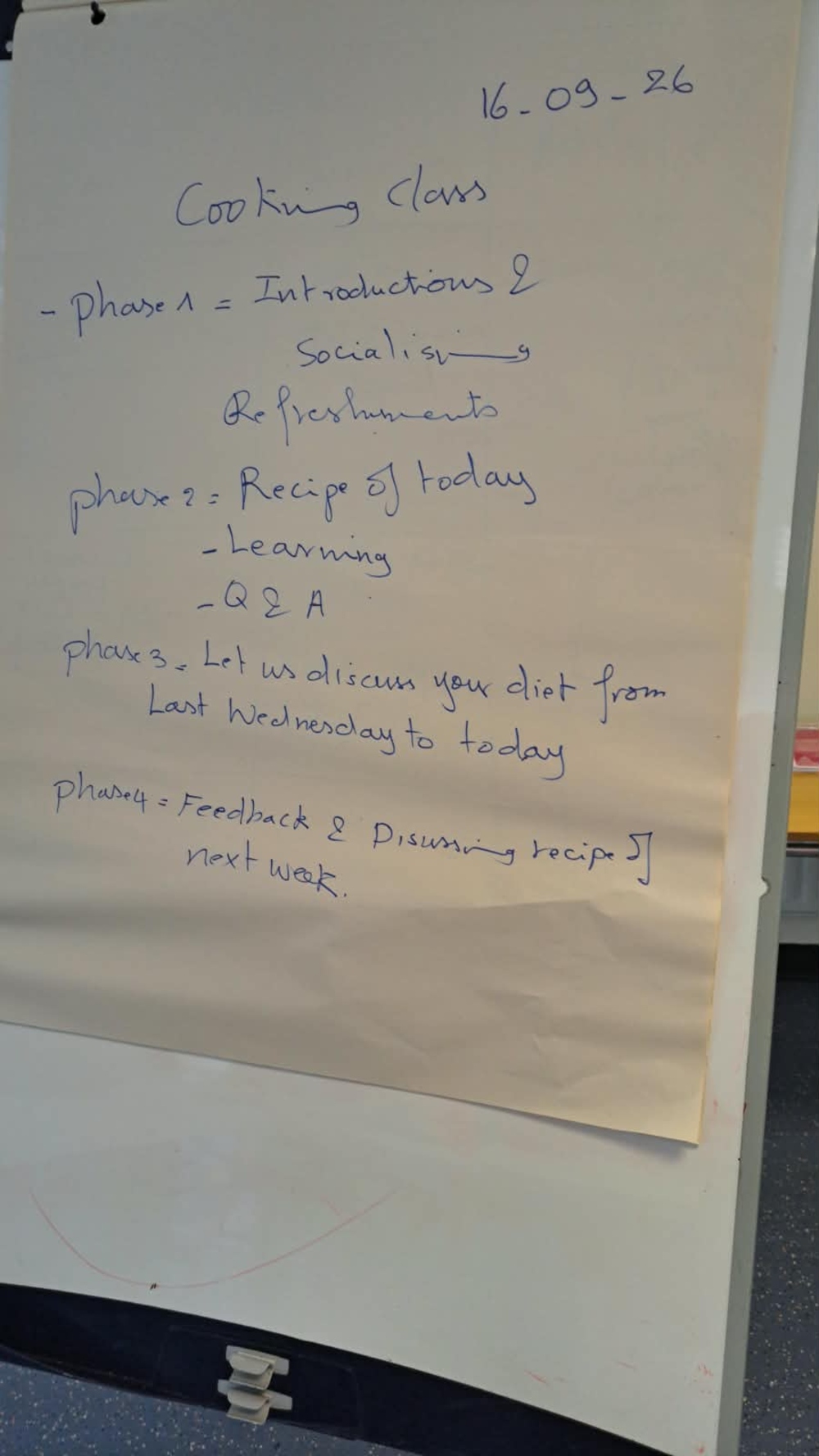
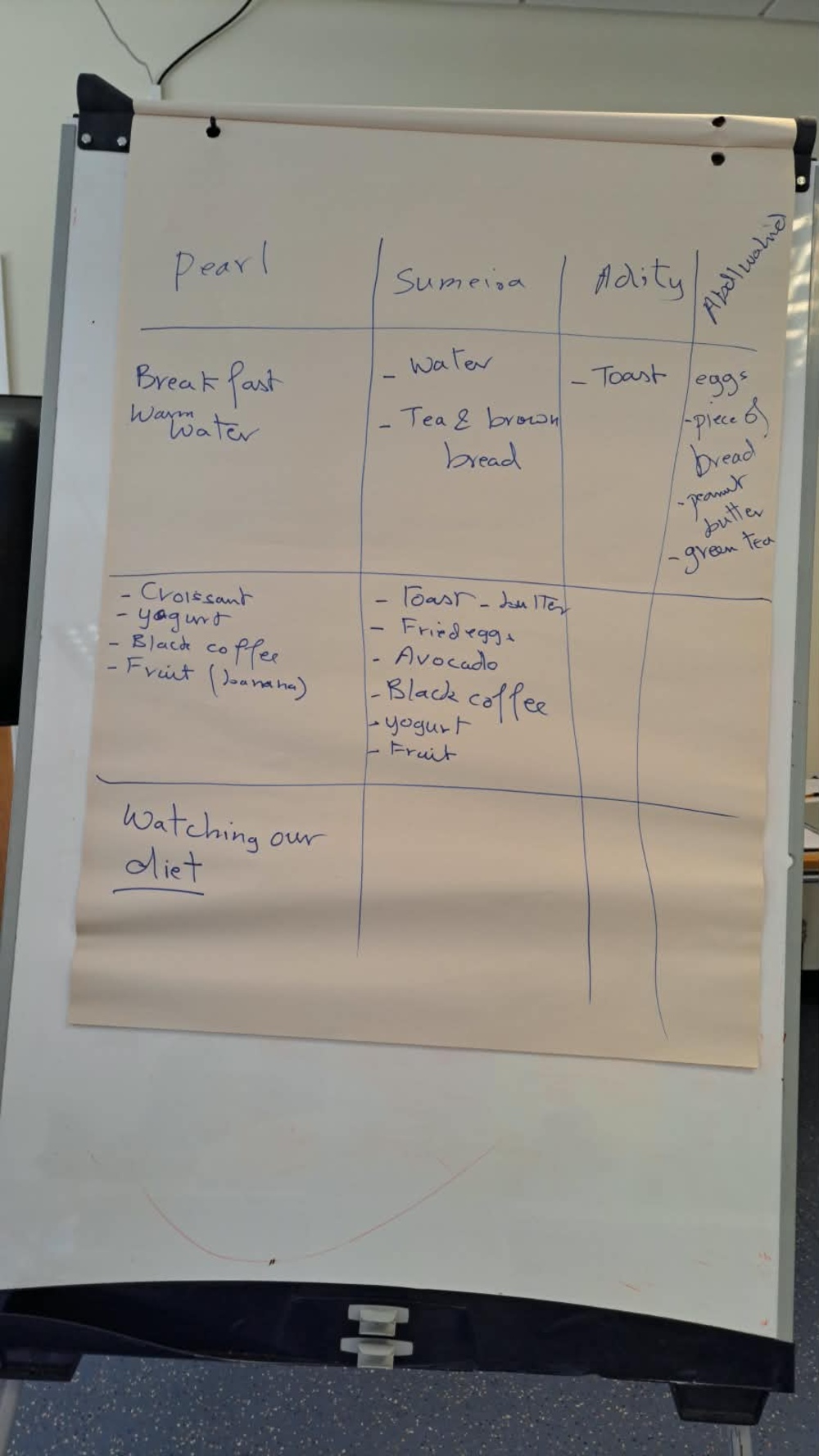
Over the past 12 weeks, our cookery course has brought community members together to learn how to prepare healthy, affordable, and nutritious recipes. But if we look beneath the surface, this program is about much more than culinary techniques; it is a targeted intervention designed to address health inequalities, challenge social injustice, and continue to bring the core mission of Diversity House to life.
The Intersection of Health Inequality and Social Injustice
To understand the true value of community cooking, we must first look at the social determinants of health. Research consistently shows that marginalised and vulnerable communities are disproportionately impacted by diet-related health conditions. This is not simply a matter of personal choice; it is a profound social injustice.
Systemic barriers—such as food deserts, the high cost of living, and a lack of generational knowledge regarding food preparation—often push low-income individuals toward cheap, ultra-processed foods. When people are denied the resources, knowledge, or tools to feed themselves and their families nutritiously, their long-term health and well-being suffer.
By offering a comprehensive 12-week cookery course, Diversity House is actively interrupting this cycle. We believe that access to healthy food, and the knowledge of how to prepare it, is a fundamental human right.
Cooking as a Catalyst for Inclusion and Cohesion
Through this initiative, we are putting the Diversity House vision into tangible action: promoting inclusion, integration, reintegration, social cohesion, and empowerment.
When individuals from diverse backgrounds gather around a chopping board, social barriers begin to dissolve. The kitchen becomes a safe space for inclusion and integration, where marginalised individuals can connect with others, combating the silent epidemic of loneliness. For those who have experienced isolation or setbacks, this program aids in reintegration, providing a structured, supportive environment to rebuild a routine.
Furthermore, we intentionally use cooking to teach transferable life skills. As participants learn to follow recipes, they are simultaneously developing commitment, punctuality, socialisdation, and problem-solving skills. The kitchen fosters a positive attitude toward learning and builds profound self-confidence—skills that radiate outward into their personal and professional lives, ultimately strengthening social cohesion within our wider community.
A Case Study in Empowerment: Celebrating Paul Atmore
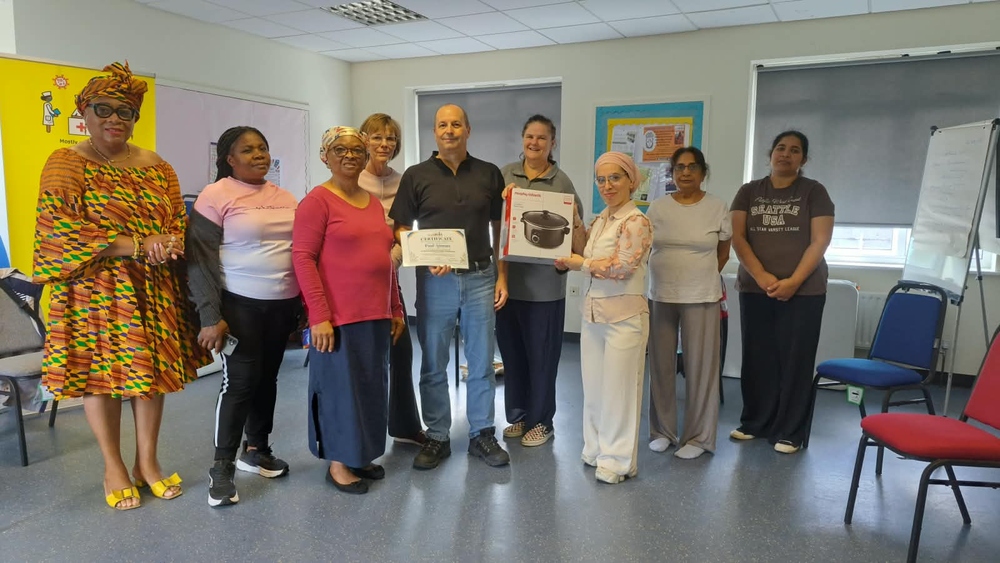
Systemic change begins with individual empowerment, and today, we have a beautiful example of this to share. We are taking a moment to celebrate one of our amazing service users, Paul Atmore.
Since joining the program, Paul has been a shining example of what this course sets out to achieve. His unwavering commitment, punctuality, and eagerness to absorb every lesson have been truly inspiring to witness. Paul did not just learn to cook; he discovered a newfound confidence.
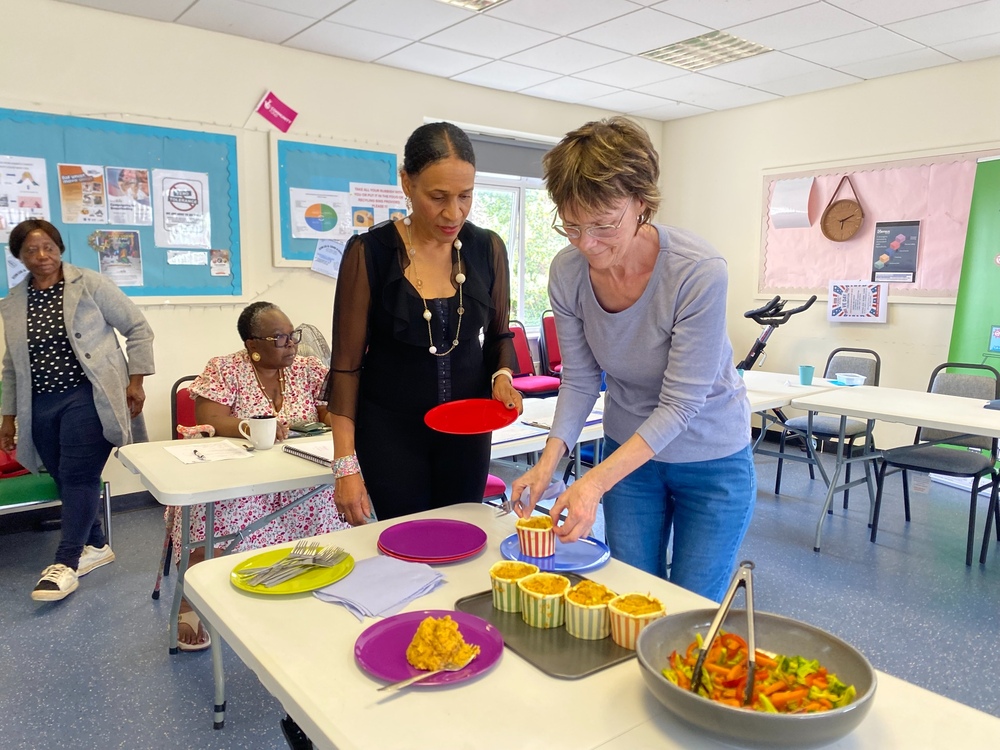
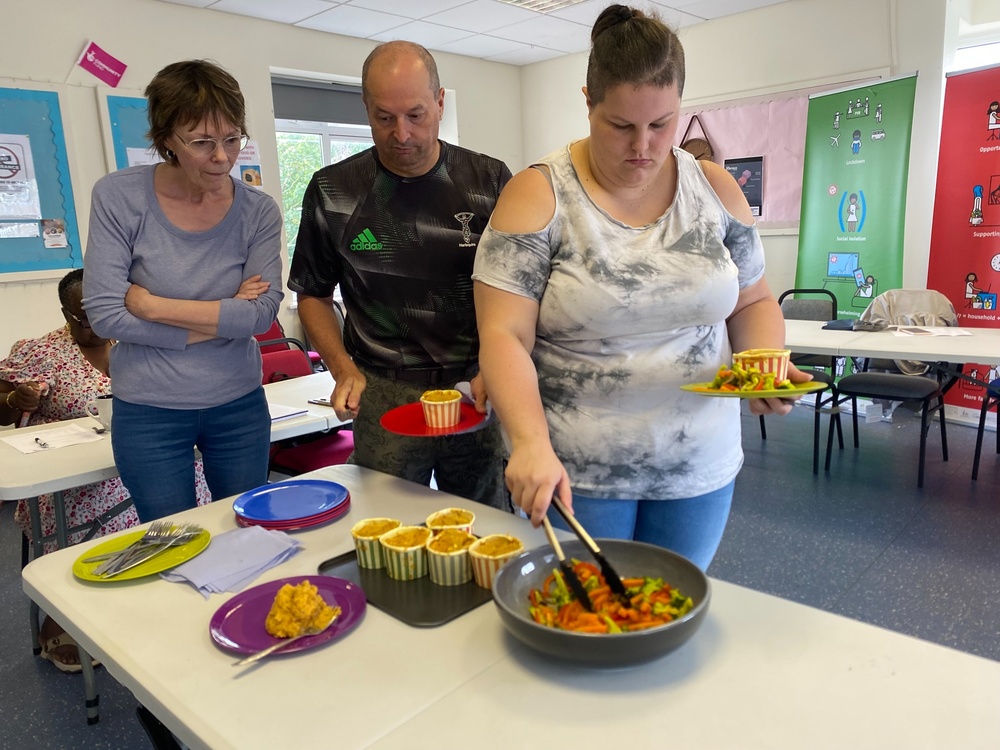
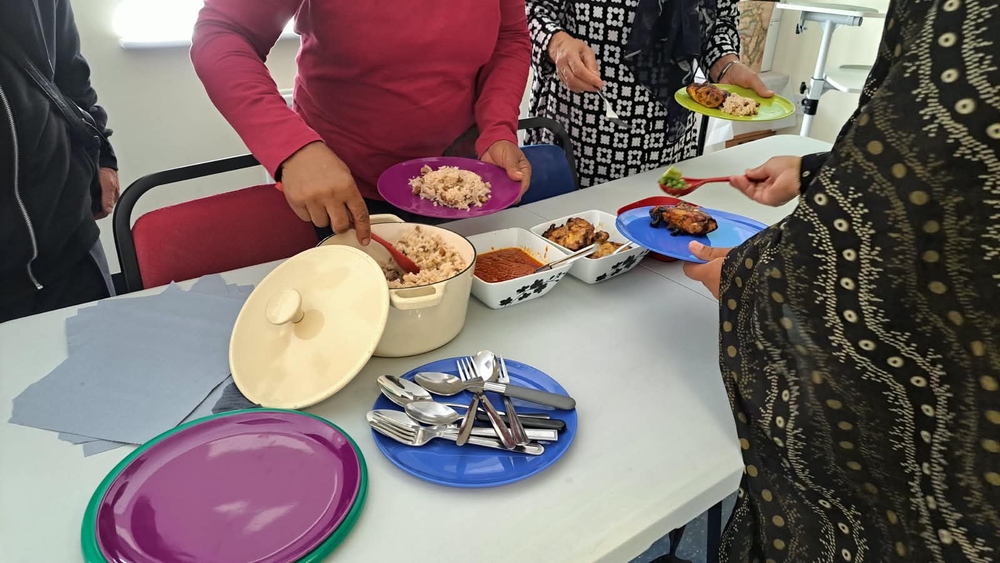
Recently, as part of the culmination of his 12-week journey, Paul stepped up to lead his very own cooking class under the supervision of our head chef. Watching him share his newly acquired skills with such excitement and authority, and seeing his peers thoroughly enjoy the meal he facilitated, was an absolute joy. It was the very definition of empowerment.
Equipping for the Future
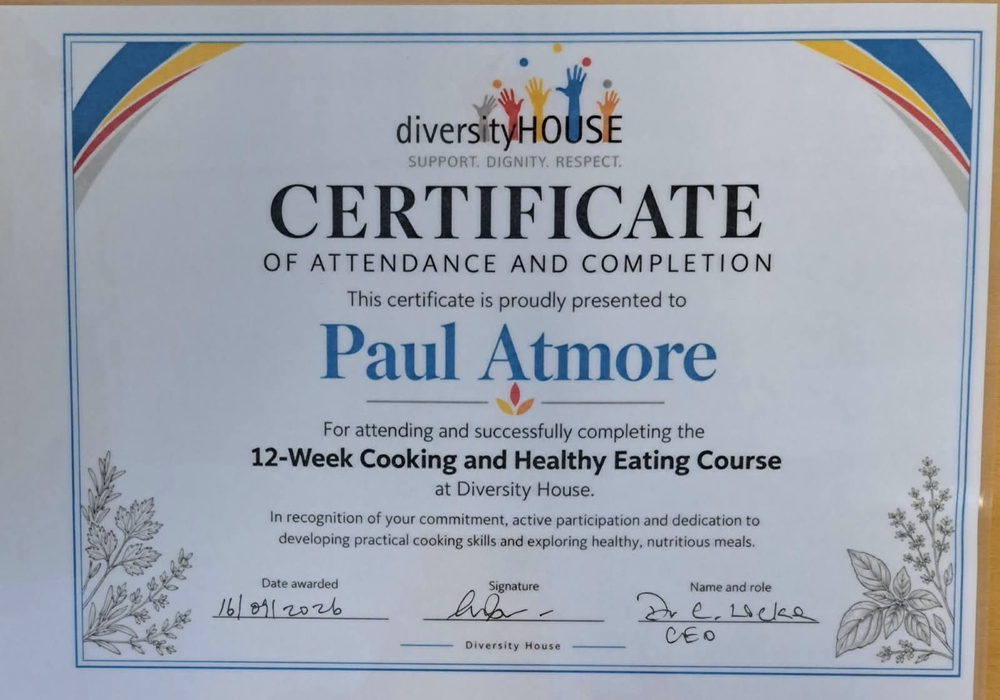
We believe that celebrating success is vital for building self-worth. To recognise regular attendance, punctuality, and a genuine willingness to learn, participants who successfully reach the end of the course and demonstrate their skills are awarded a Certificate of Achievement.
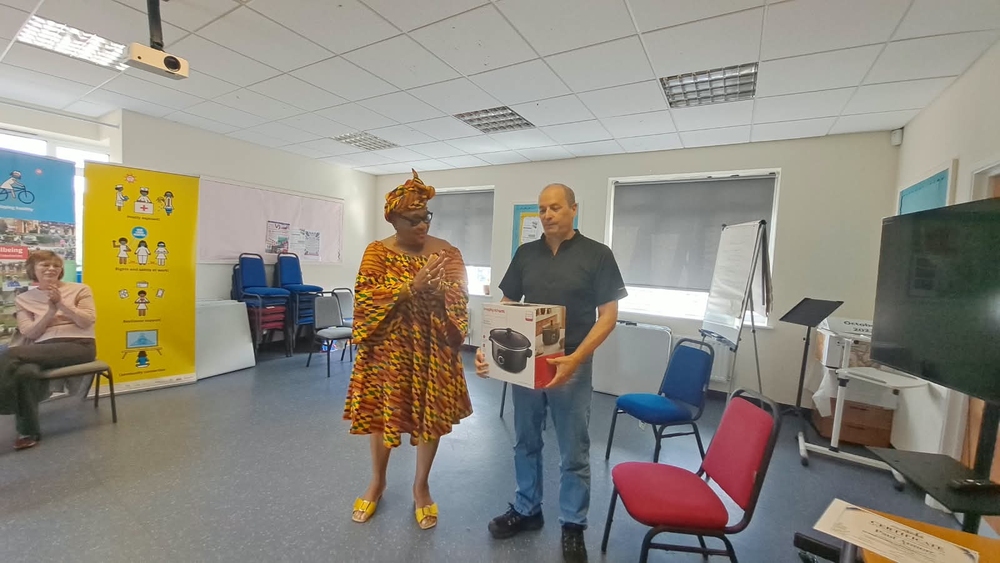
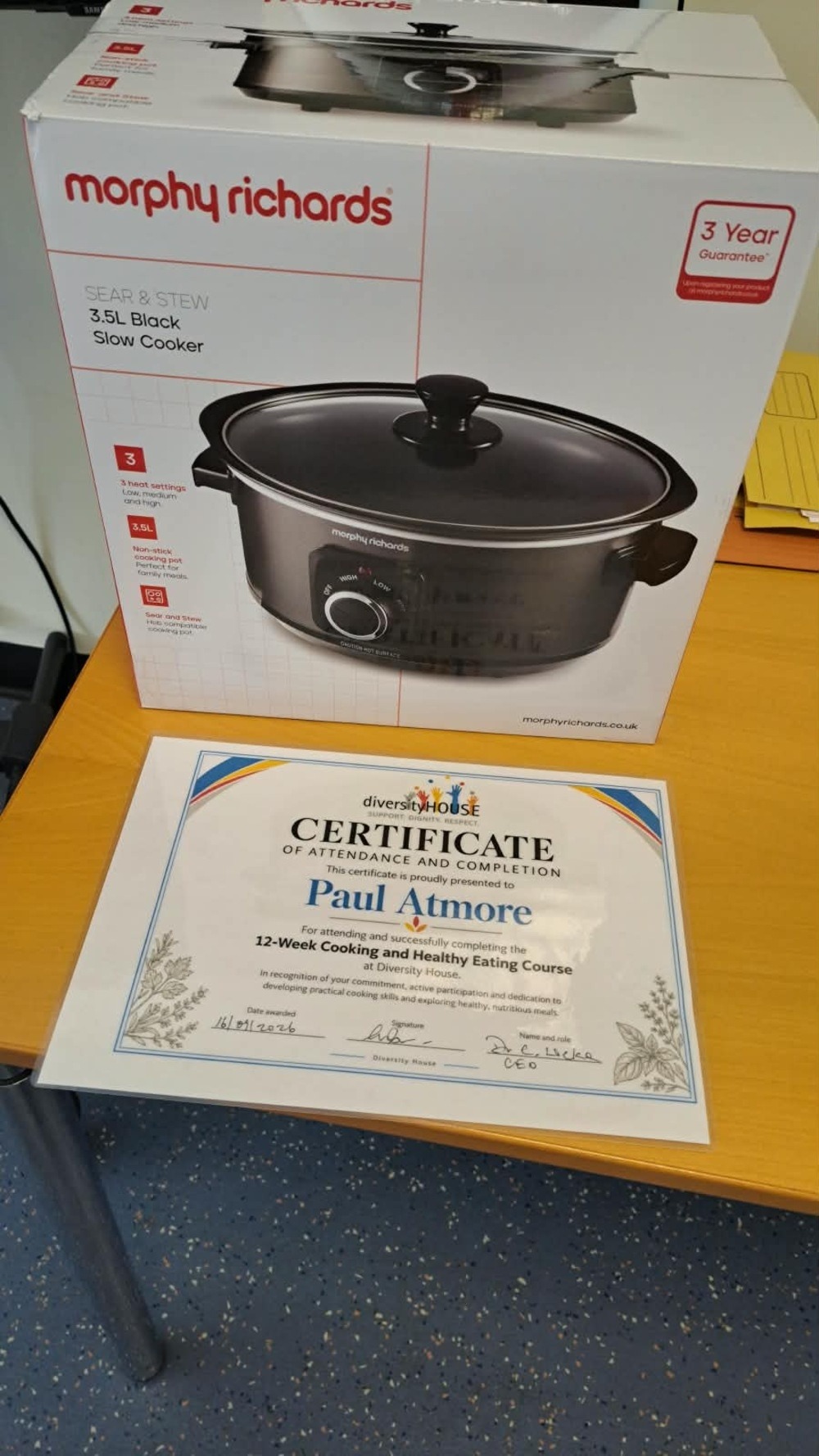
But we also want to ensure that the health benefits of this course are sustainable. Therefore, we are proud to award Paul, and our other qualifying graduates, their very own slow cooker. A slow cooker is a highly energy-efficient appliance that makes cooking healthy, whole-food meals from scratch accessible, affordable, and manageable, directly combatting the time and energy poverty that often drives health inequalities.
At Diversity House, we are not just teaching people how to cook; we are giving them the ingredients to rebuild their confidence, health, and independence.
To learn more about Diversity House’s community programs, or to support our mission of promoting community integration, re-integration, social inclusion, and cohesion within Swale and the wider Kent area, please explore our website or contact our team at info@diversityhourse.org.uk or Drzinalehef@diversityhouse.org.uk
Our work focuses on empowering individuals and addressing inequalities by creating opportunities for meaningful participation in society.