

Healthcare Cooperation in Times of Conflict and Crisis: Why Communities Must Come First
Reflections from AidEX 2026 | Geneva by Dr Christine Locke
In times of conflict, displacement and humanitarian crisis, access to healthcare is more than a service. It is a fundamental human right, a matter of dignity and a measure of our collective humanity.
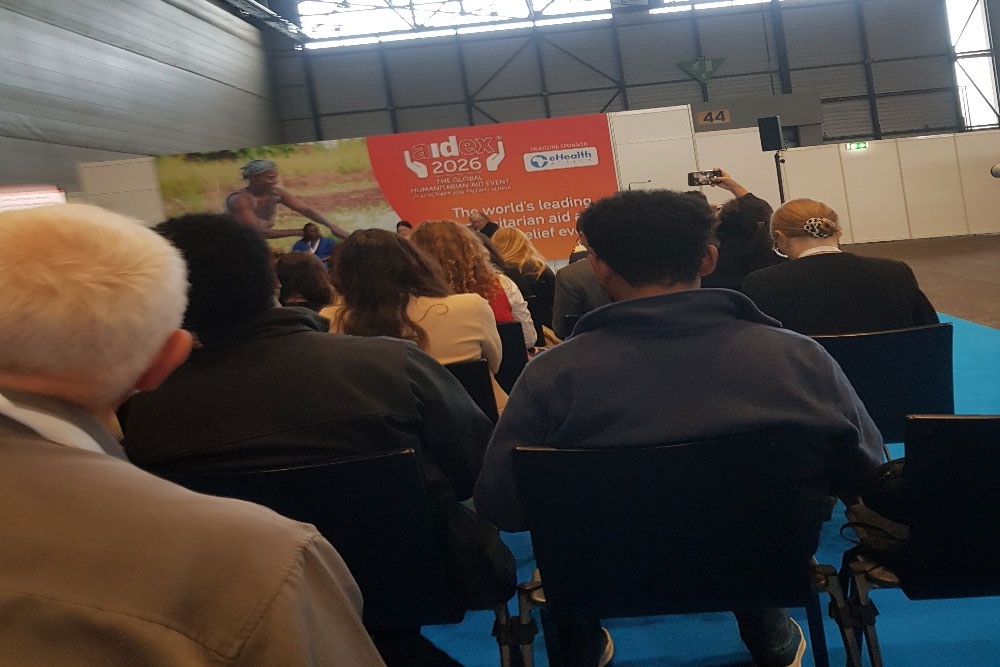
At AidEX 2026 in Geneva, Diversity House engaged with an important conversation through the workshop:
“What Does Effective Healthcare Cooperation Look Like When Communities Face Conflict and Crisis?”
It is a question that deserves serious attention, particularly as communities across the world continue to experience conflict, instability, displacement and growing pressure on essential healthcare services.
One thing is clear: effective healthcare cooperation must go beyond emergency assistance. It must put people, communities and human dignity at its centre.
This requires more than organisations working alongside one another. It demands genuine partnerships between governments, humanitarian agencies, healthcare providers, civil society and local communities. It requires trust, coordination, shared responsibility and a commitment to solutions shaped by the people most affected.
Crucially, communities must not be viewed simply as recipients of humanitarian assistance. They must be recognised as active partners, whose knowledge, lived experiences and local leadership are essential to developing effective and sustainable responses.
Inclusion must also remain central. Women, children, older people, persons with disabilities, displaced populations and marginalised groups often face disproportionate barriers to healthcare during crises. An effective humanitarian response must recognise these inequalities and ensure that nobody is overlooked.
Equally, cooperation must look beyond immediate relief. Strengthening local healthcare capacity, investing in community resilience, supporting healthcare professionals and ensuring continuity of essential services are vital to building stronger systems for the future.
For Diversity House, these discussions reinforce a fundamental principle: humanitarian action must be inclusive, equitable, community-led and grounded in human dignity.
My engagement at AidEX 2026 representing Diversity House, provided an important opportunity to reflect on the value of international collaboration, exchange perspectives and consider how stronger partnerships can contribute to better outcomes for communities facing adversity.
Ultimately, the success of healthcare cooperation should not be measured solely by the resources mobilised or interventions delivered, but by the lives improved, inequalities addressed, dignity protected and communities empowered.
Because healthcare should never be determined by geography, displacement or circumstances. In times of crisis, no community should be left behind.
Diversity House – Advancing inclusion, strengthening communities and championing dignity for all.